
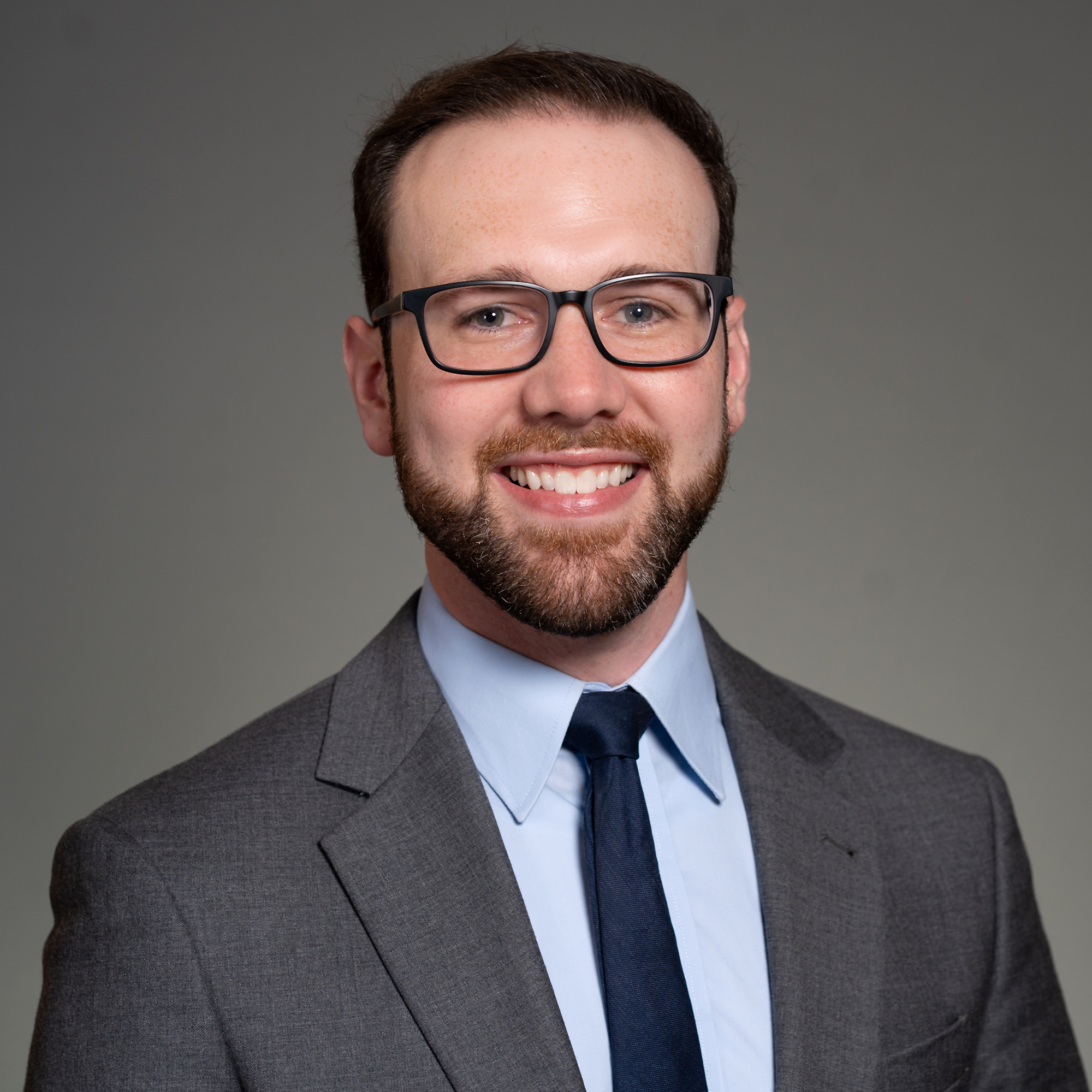
Meet Dr. Michael Murphy
Your Partner in Advanced Hip & Knee Care
Credentials
Education
- Biomedical Engineering at Marquette University (Summa Cum Laude)
- Medical School & Residency in Orthopaedic Surgery at Loyola University Medical Center
- Fellowship in complex hip and knee replacement at Anderson Orthopaedic Clinic in Arlington, Virginia
Honors
- Recognized as an Emerging Leader by the American Orthopaedic Association (AOA)
- Highlighted as an expert in artificial intelligence (AI) in orthopaedics on the Device Nation podcast
Academic Affiliations
- American Association of Hip and Knee Surgeons (AAHKS)
- American Orthopaedic Association (AOA)
A Commitment to Patient-Centered Care
Dr. Michael Murphy, MD, is a fellowship-trained Orthopaedic Surgeon focused on minimally invasive hip and knee replacement and complex revision surgery, helping active adults and seniors return to pain-free movement with confidence. With a foundation in Biomedical Engineering and advanced arthroplasty training, his approach blends precise preoperative planning, soft‑tissue–sparing techniques, and evidence‑based recovery pathways to deliver durable results that feel natural in daily life. Recognized as an Emerging Leader by the American Orthopaedic Association and engaged with innovations at the intersection of orthopaedics and technology, Dr. Michael Murphy partners with patients through clear education and shared decision‑making so every step, from nonoperative care to surgery, is personalized to goals, lifestyle, and long‑term joint health.
My Philosophy of Care
Dr. Michael Murphy’s philosophy is simple and steadfast, every person is more than a diagnosis, and care should honor the goals, routines, and relationships that make life meaningful. Care begins with listening, truly understanding what hurts, what has been tried, and what a successful outcome looks like, so each plan reflects personal priorities as much as medical best practice. Grounded in patient‑first, evidence‑driven orthopaedics, his approach blends precise diagnosis with individualized treatment planning and compassionate guidance at every step. Non-operative therapies are thoughtfully explored to reduce pain and improve function, and when surgery is prioritized to reduce disruption, support early mobility, and shorten the path back to daily life. With clear communication, shared decision‑making, patients feel informed, supported, and confident from the first visit through recovery and long‑term joint health.
What patients can expect
- Clear diagnosis and education: Plain-language explanations of imaging, pathology, and all available treatment options, including expected benefits, risks, and timelines.
- Personalized, stepwise care: Exhaustion of conservative measures when appropriate; seamless transition to surgery when benefits are clear and goals are aligned.
- Minimally invasive surgery when feasible: Muscle-sparing techniques designed to reduce pain, support early mobilization, and speed return to daily activities.
- Modern recovery protocols: Multimodal pain management, early physical therapy, and structured milestones that prioritize safety, independence, and durable function.