
Total Knee Replacement
Total knee replacement (TKA) is a surgery that resurfaces the entire knee joint with artificial components to relieve severe arthritis pain, correct deformity, and restore function when non-surgical care no longer helps, and it is among the most successful procedures in modern medicine with high long-term satisfaction and function rates. Compared with partial replacement, TKA addresses tricompartmental or advanced disease and is preferred when damage involves multiple compartments or significant deformity/instability is present, with recovery typically progressing from immediate walking to most daily activities in 6–12 weeks and continued gains up to 12 months.
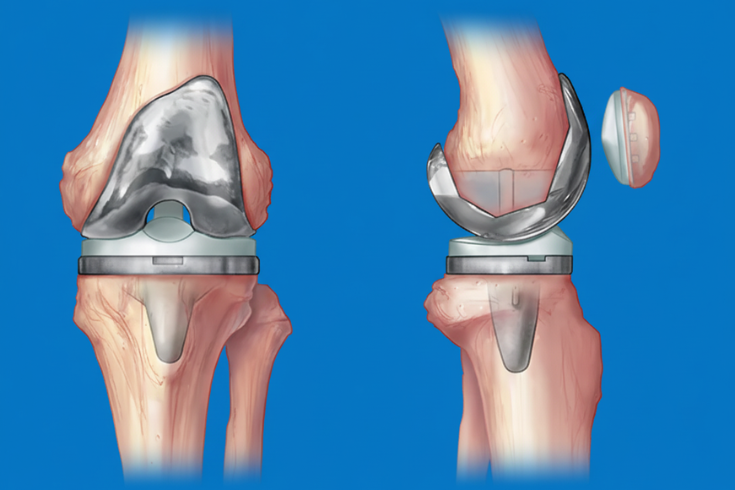
Who should get total knee replacement
- Candidates typically have severe knee pain and stiffness limiting walking, stairs, and daily tasks, with radiographic evidence of end-stage arthritis across one or more compartments and failure of medications, injections, and physical therapy.
- TKA is recommended when there is tricompartmental disease, significant deformity, or ligamentous imbalance that would not be fully addressed by a partial knee, or when prior surgeries have failed to control symptoms.
- Comprehensive evaluation includes history, physical examination, weight-bearing X-rays, and sometimes advanced imaging to assess cartilage loss, alignment, bone quality, and soft-tissue stability before planning surgery.
- There are no absolute age or weight cutoffs decisions are based on pain, disability, and failure of non‑operative care, including rest, anti‑inflammatory medicines, injections, and physical therapy

Ready to Take the Next Step?
Schedule a consultation with Dr. Michael Murphy to find if total knee replacement is the right solution for you.
The advantages of precise surgery
- Accurate alignment and component positioning are critical to implant longevity and function; modern navigation and robotic-assisted techniques reduce alignment outliers and improve soft-tissue balancing, supporting more reproducible outcomes.
- Precision planning allows surgeons to simulate bone cuts and soft-tissue balance before cutting, often reducing the need for releases and potentially decreasing pain and recovery time while maintaining surgeon control throughout the procedure.
- Early studies and reviews associate robotic TKA with improved alignment accuracy, shorter length of stay, and favourable early function and satisfaction, though long-term advantages and cost-effectiveness are still being researched.
How doctors help in this condition
- Surgeons guide shared decision-making, ensuring indications are met, optimizing medical comorbidities, and setting expectations, then select implant designs and surgical approaches tailored to anatomy and activity goals.
- Multimodal perioperative protocols cover anaesthesia (spinal or general), regional nerve blocks, infection prevention, blood clot prophylaxis, and early mobilization to reduce pain and complications and speed recovery.
- Rehabilitation begins immediately with weight-bearing as tolerated, gait training, and range-of-motion work, with most resuming daily activities within weeks and progressive recovery continuing toward one year under follow-up monitoring.
Frequently Asked Questions (FAQ)
Q1: How long does recovery take after TKA?
Most people walk the day of surgery, resume common activities within 6–12 weeks, and continue strengthening and comfort gains for up to a year as tissues heal and adapt.
Q2: What are the main risks?
Risks include infection, blood clots, stiffness, implant loosening or wear, periprosthetic fracture, and rare nerve or vessel injury; adherence to prevention protocols and early rehab helps reduce these risks.
Q3: How long do knee replacements last?
With proper implantation and use, many modern TKAs function well for 15–20 years or more; eventual wear or loosening may require revision surgery in a subset of patients.
Q4: Is robotic-assisted TKA better?
Robotic assistance can enhance precision and reduce alignment outliers and may shorten hospital stay with favourable early outcomes, but surgeon expertise and overall care pathway remain the most important determinants, and long-term superiority is under study.
Q5: When is TKA preferred over partial knee replacement?
When arthritis involves multiple compartments, there is marked deformity or instability, or prior joint-preserving options have failed, TKA comprehensively treats joint surfaces and alignment, whereas partial replacement suits isolated single-compartment disease.