
Hip Revision Surgery
Hip revision surgery (revision total hip arthroplasty) is a complex procedure to remove and replace some or all parts of a prior hip implant when it fails due to wear, loosening, infection, instability, fracture, or recurrent pain, with specialized planning and implants required to restore stability, function, and relieve pain. Unlike a first-time hip replacement, revision is longer, technically demanding, and often involves managing bone loss, soft-tissue damage, and higher complication risks, so preparation and experienced teams are essential for good outcomes.
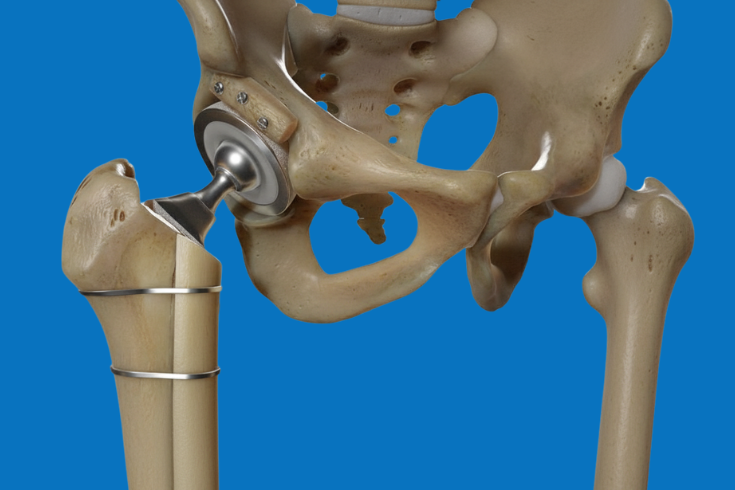
Who should get hip revision surgery
- Candidates include those with painful loosening, wear-induced osteolysis, recurrent dislocation, periprosthetic fracture, infection, or component malposition after a previous total hip arthroplasty, confirmed by history, exam, labs, and imaging.
- Decision-making weighs severity of symptoms and functional limits against surgical risk, with evaluation of bone stock, soft-tissue integrity (abductors, capsule), and medical comorbidities to choose timing and reconstructive strategy.
- Workup often includes ESR/CRP and joint aspiration for suspected infection, CT for bone loss mapping, and assessment of dislocation risk factors, which are higher after any prior hip surgery and in older or neurologically impaired patients.
- Instability after THA, particularly recurrent dislocation due to soft‑tissue or component problems, is a common reason for revision and requires targeted planning for stability restoration.

Ready to Take the Next Step?
Schedule a consultation with Dr. Michael Murphy to find if hip revision surgery is the right solution for you.
The advantages of precise surgery
- Revision success depends on precise removal of failed implants, accurate reconstruction of hip center, leg length, and offset, and stable fixation of new components to reduce instability and wear; specialized instruments and templating aid these goals.
- Careful component orientation and soft-tissue balancing reduce the markedly higher dislocation risk seen after revision THA, with data citing substantially increased dislocation rates versus primary procedures, making precision and approach selection critical.
- Detailed preoperative planning (including 3D imaging) guides selection of augments, modular stems, constrained or dual-mobility liners when indicated, helping restore function while mitigating recurrent instability or loosening.
How doctors help in this condition
- Surgeons lead a comprehensive evaluation to identify the failure mode, optimize medical conditions, and plan the revision strategy, including infection management pathways and reconstructive options based on bone and soft-tissue status.
- Perioperative care includes anaesthesia planning, multimodal analgesia, infection and blood clot prophylaxis, and early but protected mobilization with precautions tailored to the surgical approach and instability risk.
- Rehabilitation emphasizes gait training, strengthening, and adherence to hip precautions to limit dislocation risk, with recovery generally slower than after primary hip replacement and requiring close follow-up for wound, implant stability, and function.
Frequently Asked Questions (FAQ)
Q1: When is hip revision surgery necessary?
It is considered for loosening, wear and osteolysis, infection, instability/dislocation, fracture around the implant, mispositioned components, or persistent pain after a prior hip replacement, once nonoperative options are exhausted and diagnosis is confirmed.
Q2: Is recovery longer than a first hip replacement?
Yes; recovery is typically longer due to more extensive surgery and reconstruction, with many programs counselling several months for functional recovery and around six months for a fuller return, depending on bone healing, soft tissues, and rehab.
Q3: What are the main risks?
Risks include infection, blood clots, dislocation (notably higher after revision), fracture, nerve injury, limb-length discrepancy, and implant loosening; meticulous planning, accurate implant positioning, and adherence to precautions mitigate these risks.
Q4: How do surgeons reduce dislocation risk after revision?
By optimizing cup and stem positioning, restoring offset and leg length, repairing or augmenting soft tissues, and using dual-mobility or constrained liners when indicated, alongside strict postoperative precautions and rehab protocols.
Q5: What should patients expect from outcomes?
Many achieve significant pain relief and improved function when the cause of failure is corrected and reconstruction is stable, though outcomes vary by failure mode, bone and soft-tissue quality, and adherence to rehab and precautions.