
Knee revision surgery
Knee revision surgery (revision total knee arthroplasty) is a complex operation to remove and replace some or all components of a prior knee implant when it fails from loosening, wear, infection, instability, stiffness, fracture, or persistent pain, aiming to relieve symptoms and restore function with specialized implants and reconstruction techniques. Compared with a first-time total knee replacement, revision surgery is longer, technically demanding, and carries higher risks, requiring extensive planning, bone reconstruction with augments or grafts when needed, and experienced surgical teams for best outcomes.
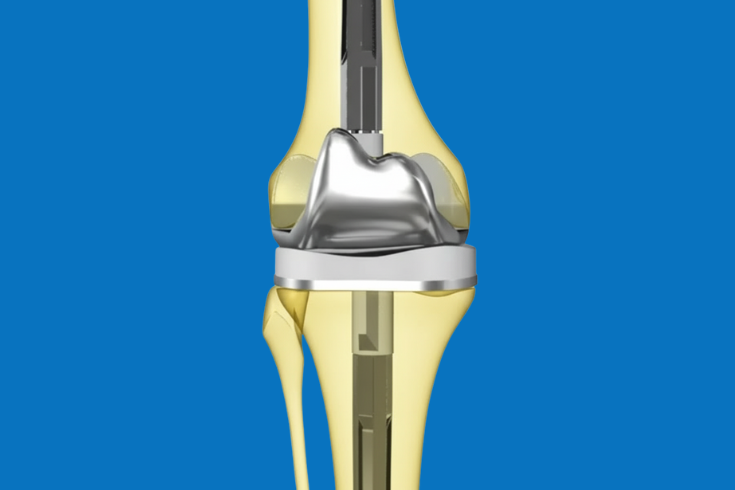
Who should get knee revision surgery
- Candidates include those with symptomatic loosening or wear, recurrent instability, stiffness, periprosthetic fracture, infection, patellar maltracking, or component malposition after a previous TKA, confirmed through history, exam, labs, and imaging.
- Workup often includes weight-bearing radiographs, CT for bone loss mapping or component rotation, and serologic markers (ESR/CRP) with joint aspiration when infection is suspected to guide single-stage versus staged revision strategies.
- Decision-making balances symptom severity, functional limitation, bone stock, ligament integrity, comorbidities, and expectations, with counseling on higher complication rates and the possibility of additional surgeries compared with primary TKA.
- Instability after TKA, particularly recurrent dislocation due to soft‑tissue or component problems, is a common reason for revision and requires targeted planning for stability restoration.

Ready to Take the Next Step?
Schedule a consultation with Dr. Michael Murphy to find if knee revision surgery is the right solution for you.
The advantages of precise surgery
- Precise restoration of mechanical axis, joint line, rotation, and ligament balance is crucial to reduce risks of recurrent instability, stiffness, and early loosening; revision instruments and templating support accurate cuts and component positioning.
- Accurate reconstruction of bone defects with augments, sleeves, cones, or grafts and selection of appropriate constraint levels help stabilize the knee while protecting fixation and minimizing wear and complications.
- Given higher risks and costs in revision arthroplasty, meticulous planning and execution reduce outliers and complications that drive readmissions and inferior implant survivorship compared with primary procedures.
How doctors help in this condition
- Surgeons diagnose the failure mode, optimize medical conditions, and plan the revision pathway, including infection management (antibiotics, single- vs two-stage revision), implant selection, and reconstruction options based on bone and soft-tissue status.
- Perioperative care uses multimodal analgesia, infection prevention, blood conservation, DVT prophylaxis, and early mobilization to reduce complications, with bracing or CPM used selectively for stiffness protocols after complex reconstructions.
- Rehabilitation focuses on restoring range of motion, quadriceps strength, and gait mechanics, with expected recovery timelines typically longer than primary TKA; patient education sets expectations for a months-long recovery with close follow-up.
Frequently Asked Questions (FAQ)
Q1: When is knee revision surgery necessary?
It is considered for loosening, wear, infection, instability, stiffness, periprosthetic fracture, malposition, or patellar problems after a previous total knee replacement when symptoms and functional limits persist despite nonoperative care and the diagnosis is confirmed.
Q2: How is infection-related failure managed?
Suspected infection prompts labs and aspiration; treatment may involve debridement with component exchange in select acute cases or staged revision with implant removal, antibiotics, and later reimplantation for chronic infections, tailored to organism and host factors.
Q3: Is recovery longer than after a primary knee replacement?
Yes; due to greater surgical complexity and soft-tissue/bone reconstruction, recovery is typically slower, with progressive gains over several months and full recovery often approaching a year depending on stiffness risk and rehab adherence.
Q4: What are the main risks?
Risks include wound complications, stiffness, infection, blood clots, fracture, neurovascular injury, continued pain, and re-revision; careful planning, precise reconstruction, and adherence to rehab protocols help mitigate these risks.
Q5: What determines implant choices in revision TKA?
Bone loss pattern, ligament competence, and instability risk drive the need for stems, augments, cones or sleeves, and increased constraint (e.g., posterior-stabilized, constrained condylar, or hinged designs) to restore alignment and durable stability.