
Total Hip Replacement
Total hip replacement (THA) replaces the damaged ball-and-socket of the hip with durable metal, ceramic, and high-grade plastic components to relieve severe pain, correct deformity, and restore function when conservative treatments fail, with strong evidence for safety, pain relief, and motion gains across age groups. The procedure involves removing the diseased femoral head and acetabular cartilage, inserting a stem and ball into the femur, and fixing a cup with a liner in the pelvis to create a smooth, low-friction joint that supports return to daily activities over weeks to months.
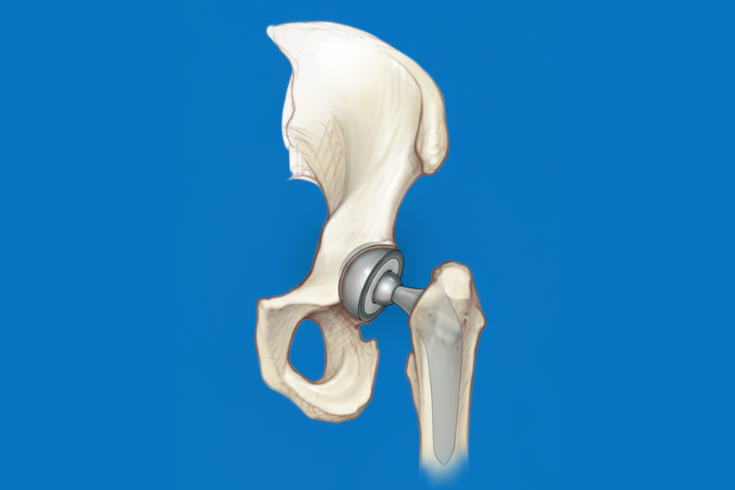
Who should get total hip replacement
- Candidates have severe hip pain and stiffness limiting walking, bending, and sleep despite medications, injections, and physical therapy, most commonly from osteoarthritis but also rheumatoid arthritis, post-traumatic arthritis, or osteonecrosis.
- Recommendations are based on pain and disability rather than age, with evaluation via history, exam, and imaging to confirm end-stage joint damage and to tailor implant selection and approach to anatomy and goals.
- Considerations include deformity, bone quality, limb-length issues, and activity level, with shared decision-making to weigh benefits and risks, including the possibility of later revision if wear or loosening occurs.
- Typical clinical triggers are persistent rest or night pain, marked stiffness limiting leg lift, and inadequate relief from anti‑inflammatory drugs, physical therapy, or walking supports before proceeding to surgery

Ready to Take the Next Step?
Schedule a consultation with Dr. Michael Murphy to find if total hip replacement is the right solution for you.
The advantages of precise surgery
- Accurate cup orientation, leg length, and offset are critical; image-based planning and robotic-assisted techniques improve implant position accuracy and reduce outliers versus manual methods, which can lower complications such as instability or impingement.
- Precision tools allow patient-specific 3D planning and controlled execution through smaller exposures when appropriate, aiming to minimize soft-tissue injury and facilitate quicker early recovery without compromising surgeon control.
- Meta-analyses report more accurate acetabular placement and reduced complication rates with robotic THA, though operative times may be longer and patient-reported outcomes can be similar to conventional surgery, with ongoing research on long-term advantages and cost-effectiveness.
How doctors help in this condition
- Orthopaedic teams guide diagnosis, nonoperative care, and timing of THA, optimize comorbidities, select approach (e.g., direct anterior, posterior), choose bearing surfaces, and plan fixation strategy to match bone quality and lifestyle goals.
- Perioperative care includes anaesthesia (general or spinal), multimodal analgesia, infection prevention, VTE prophylaxis, and early mobilization; minimally invasive techniques may cut fewer muscles but require experienced teams for best outcomes.
- Rehabilitation starts day 0–1 with protected weight-bearing as directed, hip precautions as indicated by approach, and phased strengthening and gait training, typically progressing to daily activities within weeks and continued gains over 3–12 months.
Frequently Asked Questions (FAQ)
Q1: How long is recovery after THA?
Many walk with assistance the day of or after surgery, resume basic activities in 4–12 weeks, and continue improving strength and comfort up to a year depending on approach, rehab adherence, and health status.
Q2: What are the main risks?
Risks include infection, blood clots, dislocation, leg-length discrepancy, fracture, nerve injury, and implant wear or loosening; careful planning, accurate component placement, and adherence to precautions and prophylaxis reduce these risks.
Q3: Is minimally invasive or anterior approach better?
Minimally invasive and direct anterior approaches may reduce early soft-tissue trauma and speed milestones, but they are technically demanding and outcomes depend most on surgeon experience; implants are the same as traditional approaches.
Q4: Does robotic-assisted THA improve results?
Robotic assistance improves positioning accuracy and may lower complication rates, but differences in patient-reported outcomes are often small; benefits must be balanced against longer operative time and resource needs.
Q5: How long do hip replacements last, and can they be revised?
Many modern hips last 15–20+ years; if wear, loosening, or instability occur, revision THA—using specialized implants and techniques—can restore function though it is more complex than primary surgery.